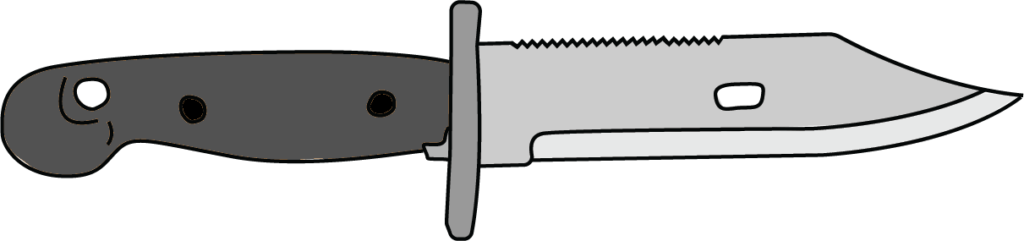

Designated: “Modell 79“
1979 – ”Modell 79” AKM Type i Adopted in Germany
AKM Type I Bayonets Issued with the new Type II Scabbard are considered German AKM Transitional
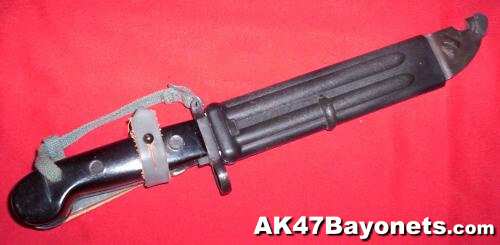
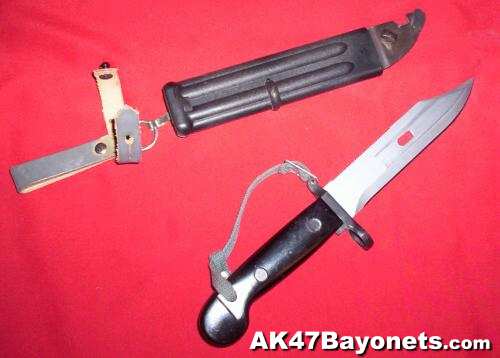


Designated: “Modell 79“
1979 – ”Modell 79” AKM Type i Adopted in Germany
AKM Type I Bayonets Issued with the new Type II Scabbard are considered German AKM Transitional
1959 – AKM Type I Bayonet adopted in Romania
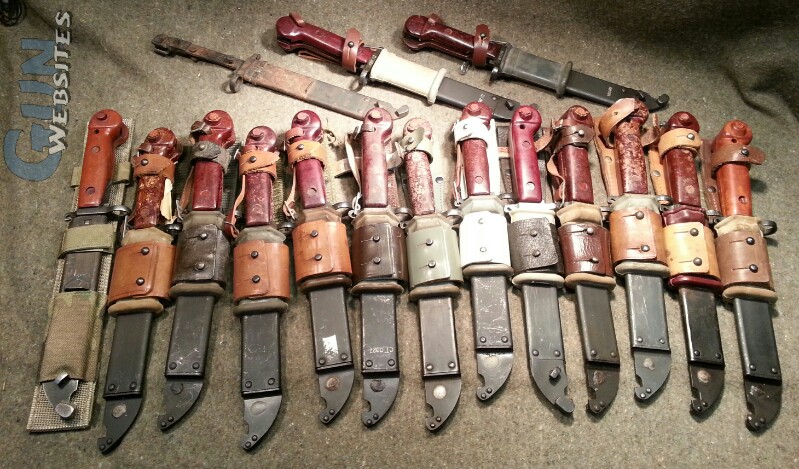
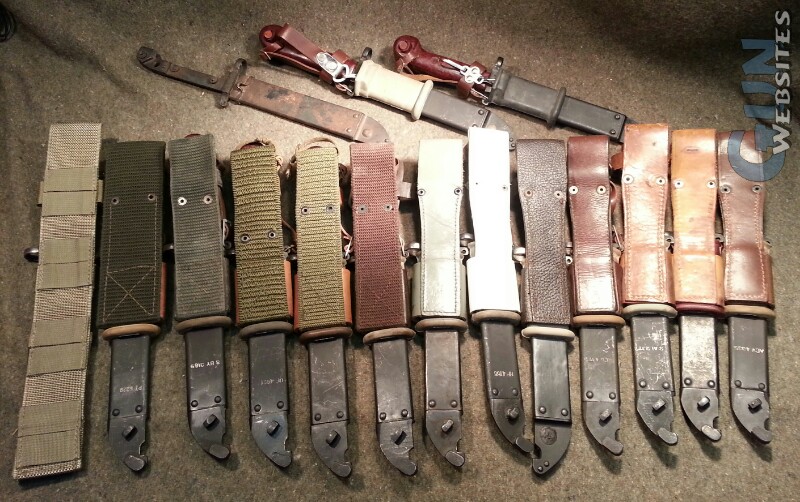
Some of the most numerous and most variety
You can never have a complete collection or set of these, there always seem to be more varieties around the corner




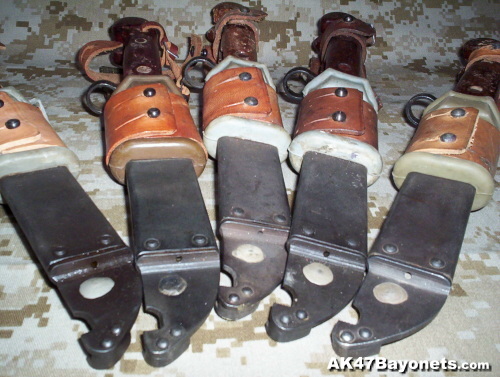


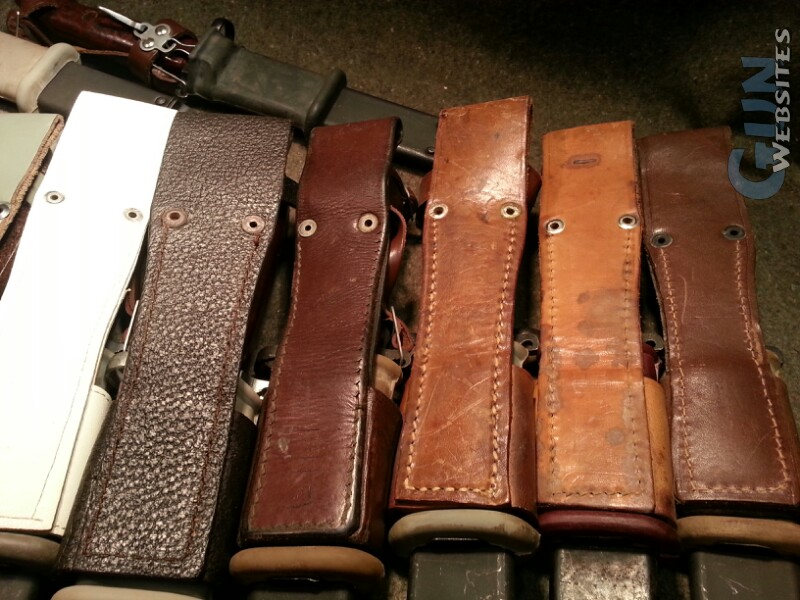
Designated: “Modell 59”
1959 – ”Modell 59” AKM Type I Adaopted in Germany
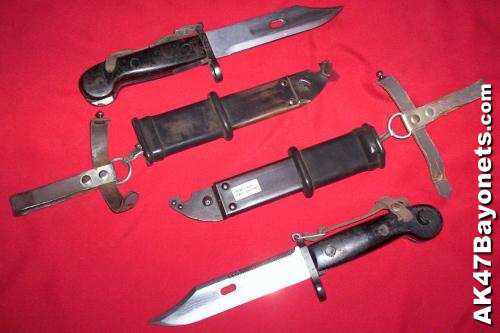
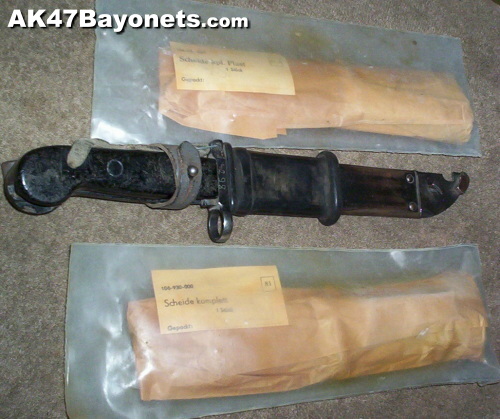
1959 – “6X3” AKM Type I adopted Russia
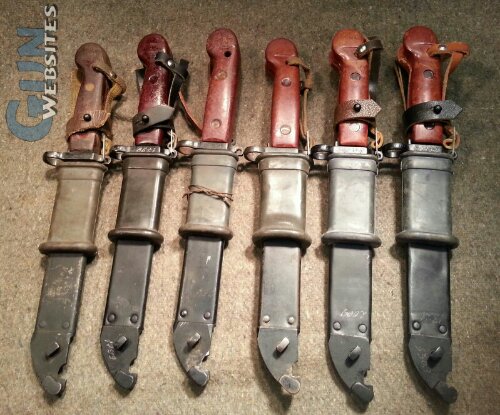
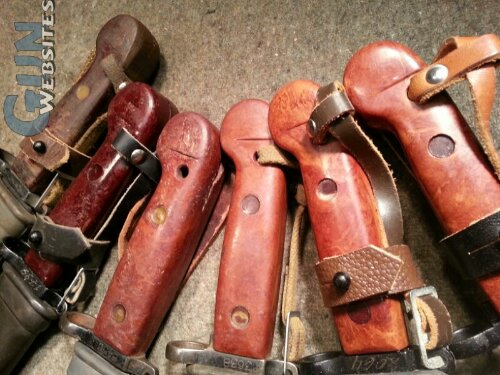
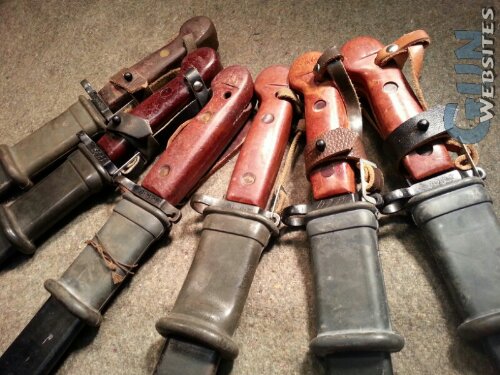
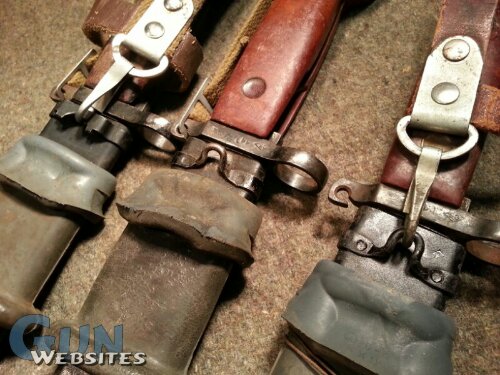
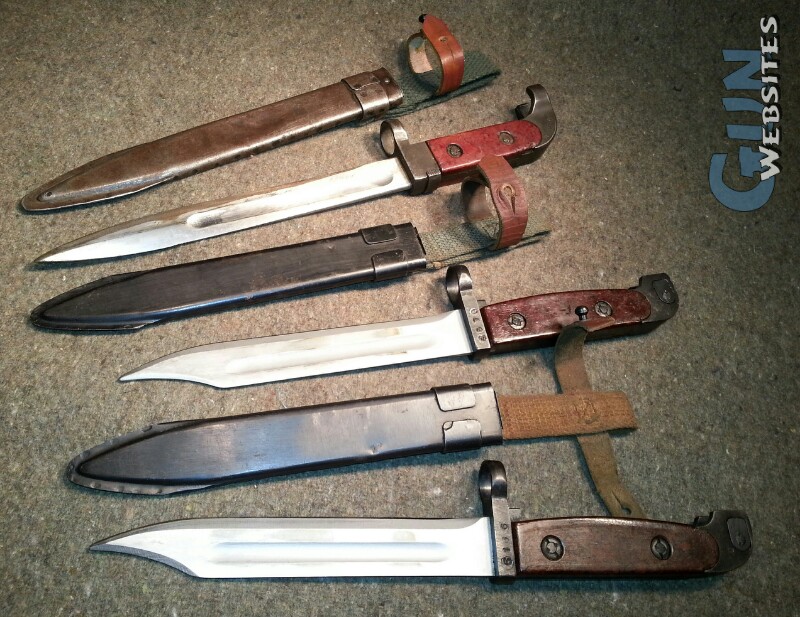
Early and later Russian ‘AKM Type I’ Bayonets
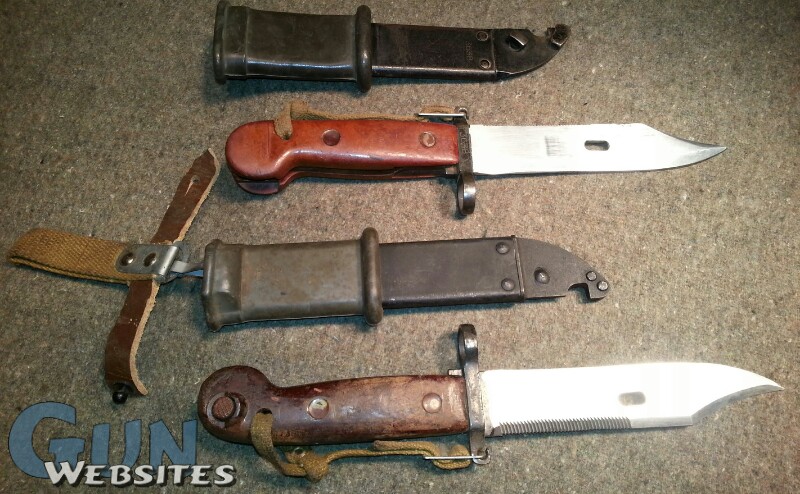
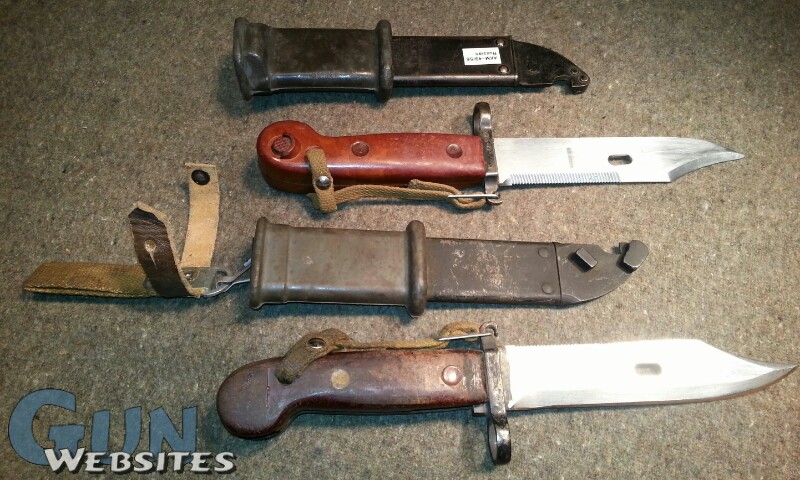
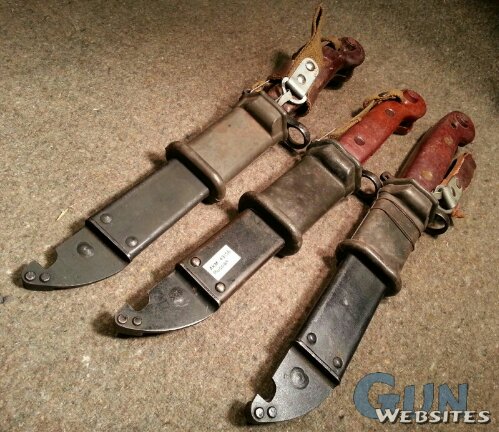
Early Russian AKM Type I on the left in these pics
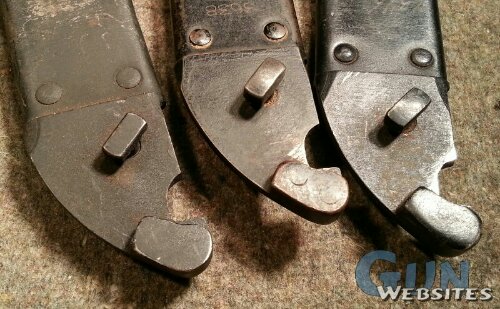
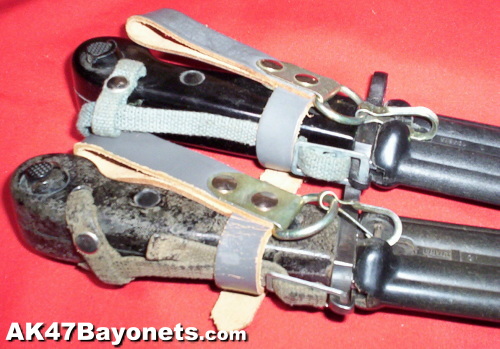
Wire Cutting Lug is ‘flat’ on the older scabbard (left), and ‘curved’ on the later versions (right)
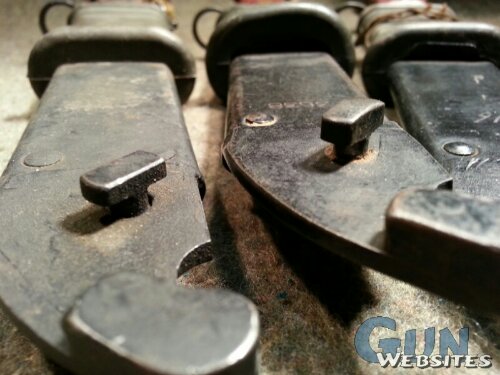
Stop for the rubber insulator is absent on the early scabbards (left)
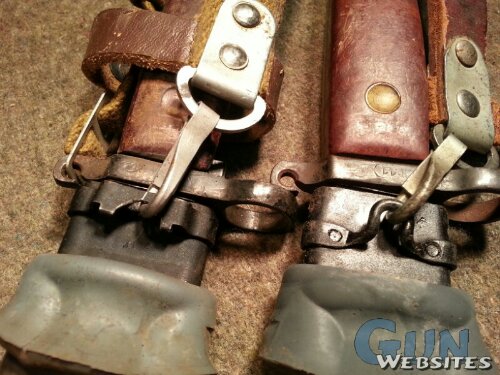
Different hanger attachment points on various versions of the scabbard
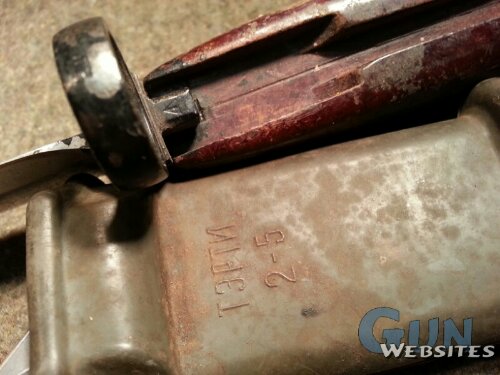
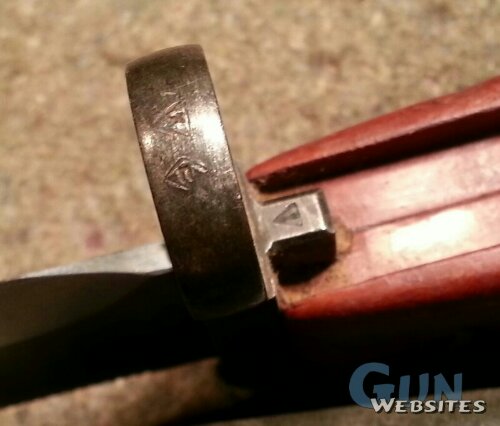
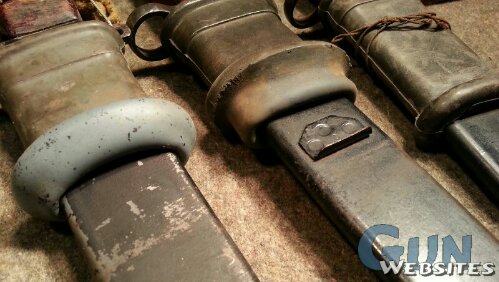
Cool Russian letters on the Insulator
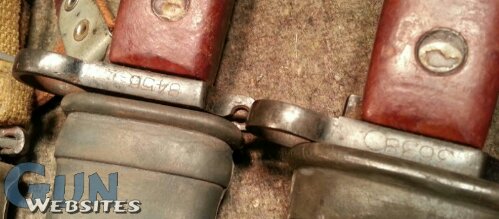
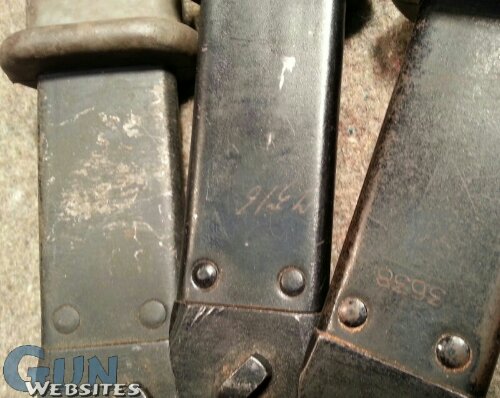
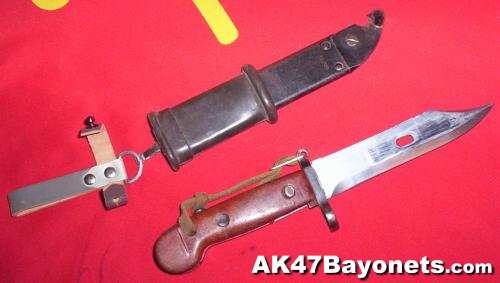
1958 – AK47 Type (56-H-212) Updated in Poland
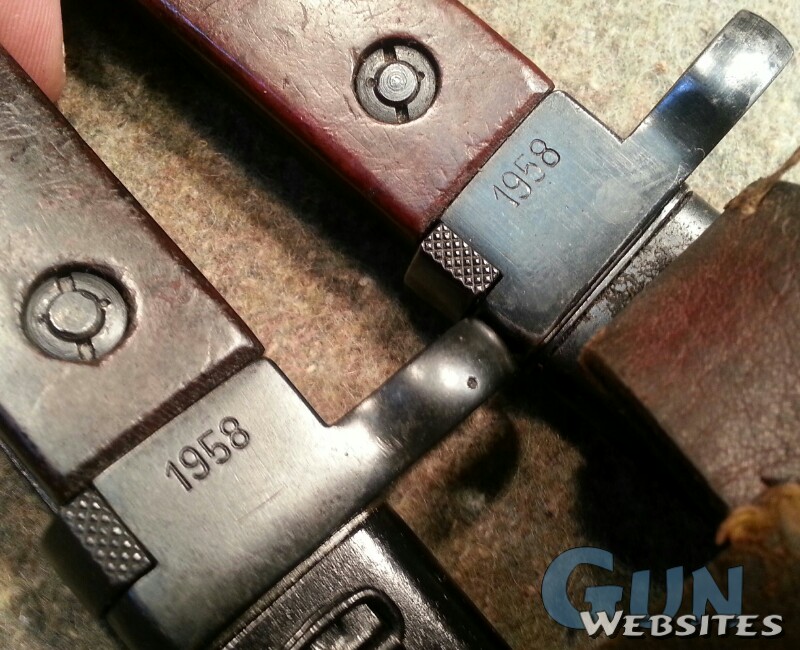
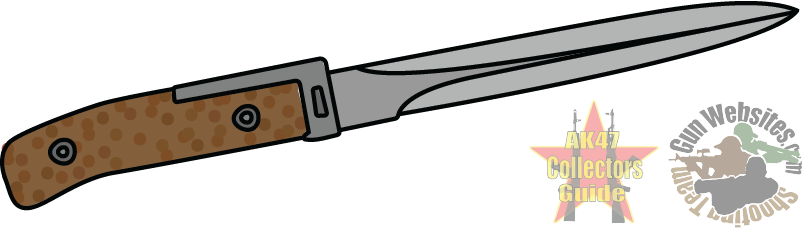
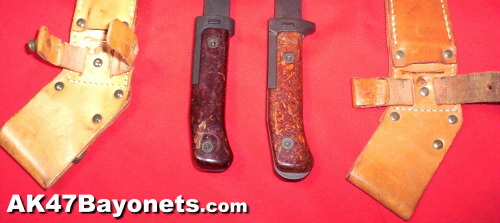
Most of the Czechoslovakian vz58 Bayonet have a double rivet on the handle
Two types of pommel, one is longer
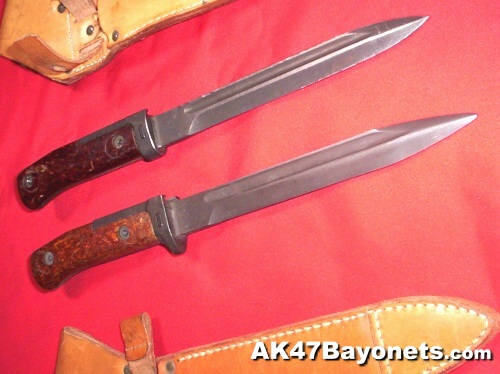
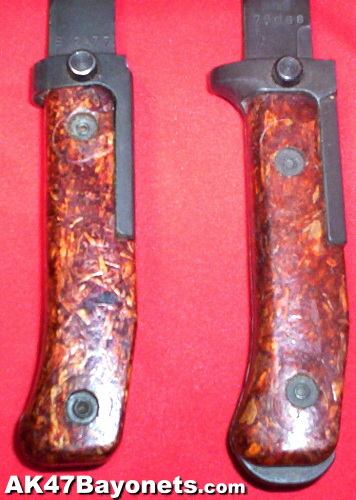
Some have a single Rivet on the handle
Is this a variant?
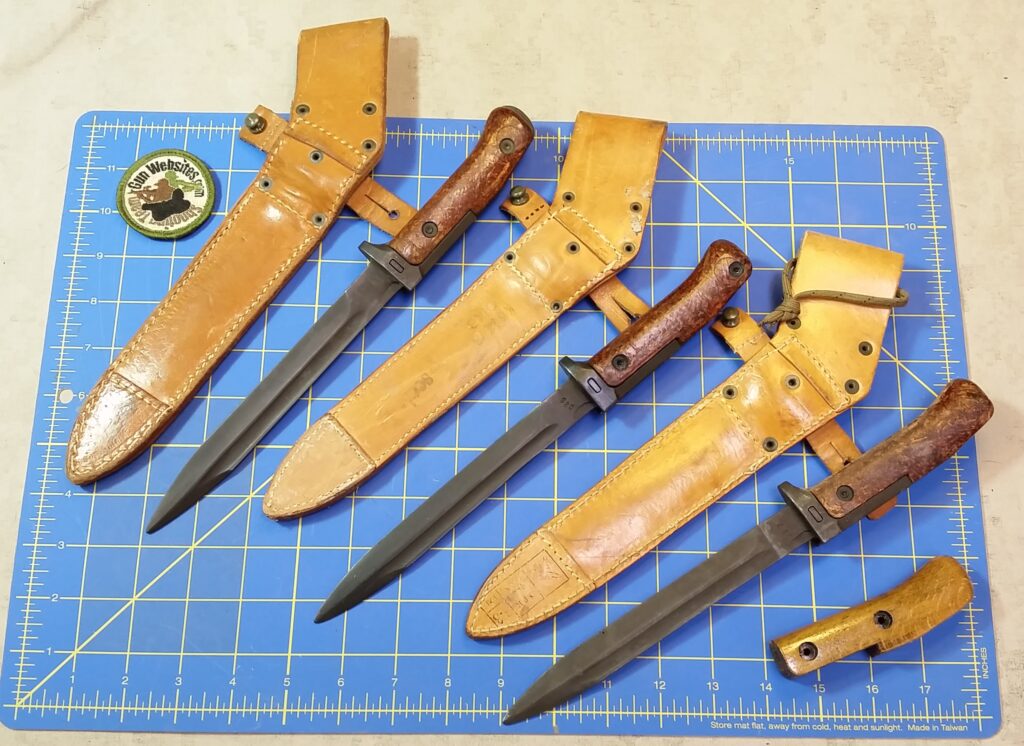

1958 – “Type 58“ AK47 Type Adopted in Korea
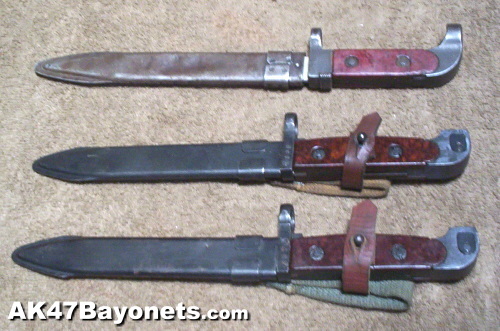
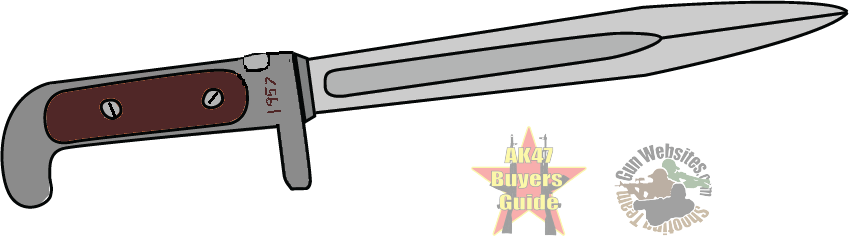
1957 – AK47 Type (56-H-212) Adopted in Poland


Chinese Pointed Spike Bayonet

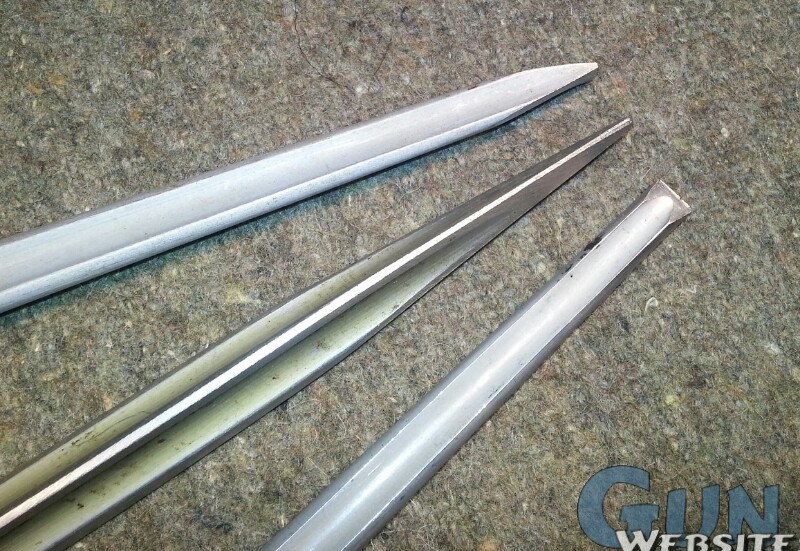
The two on the left are Chinese Pointed Angle Grind Spike Bayonet with their sharp tip ground from both sides angled toward the front and bottom. The bottom right is a Chisel Tip Spike AK47 Bayonet that is ground from the top angled down in a “Chisel” shape
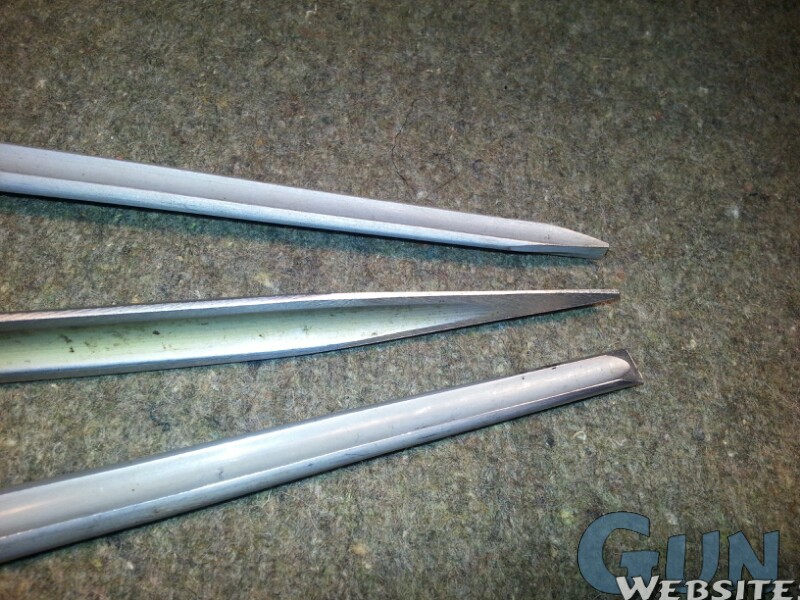
The other side of the two Chinese Pointed Spike Bayonets
The bottom is a “Chisel Tip” AK47 Spike Bayonet
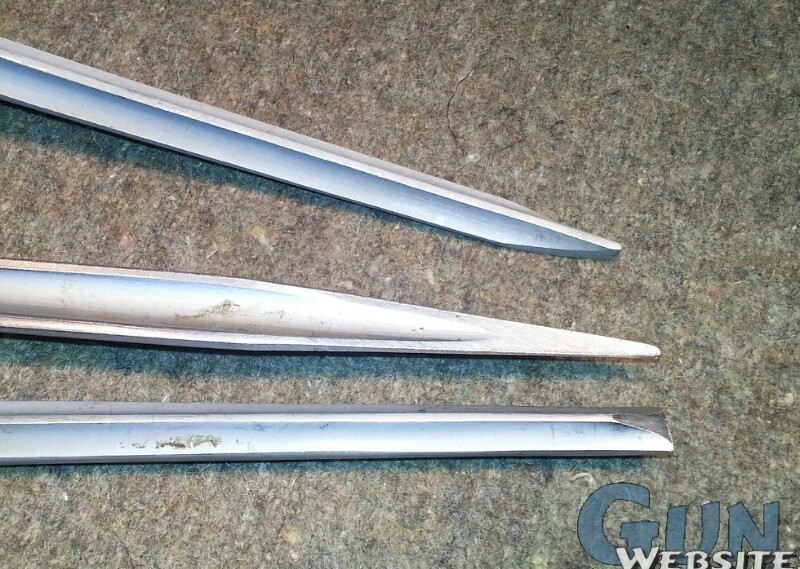
The top two are examples of the Chinese Angle Grind Spike Bayonets.
The bottom is a Chisel Tip Spike AK47 Bayonet
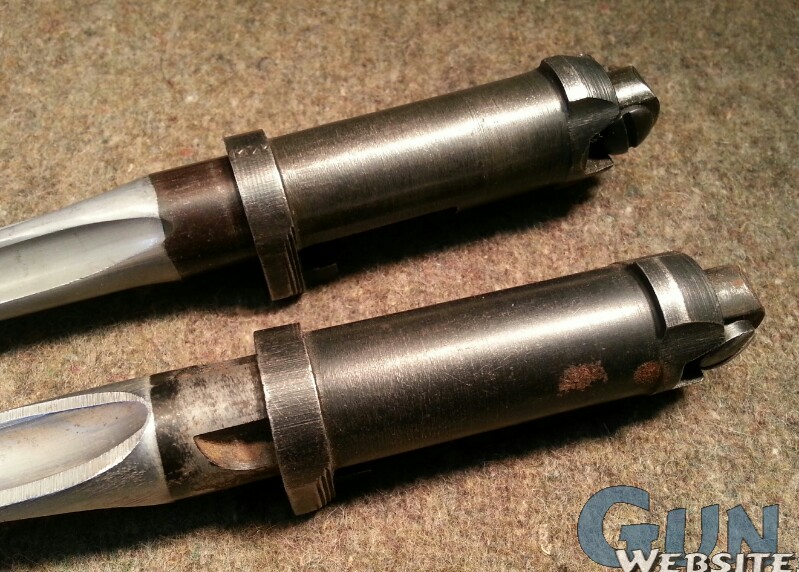
These connect to a stud under the front sight on the rifle. The screw holds the outer locking sleeve onto the bayonet (compressing the spring)